Solutions for Retail and B2B Distribution
Retail and B2B distribution works when every delivery meets the buyer's requirements exactly: the right cartons, the right labels, the right documentation, the right appointment. 3PL SPAIN helps brands and distributors build a B2B operating model from Valencia that treats delivery requirements as rules — not as variables to negotiate shipment by shipment.
- Operating model
- Failure modes
- Execution routes
OVERVIEW
OVERVIEW
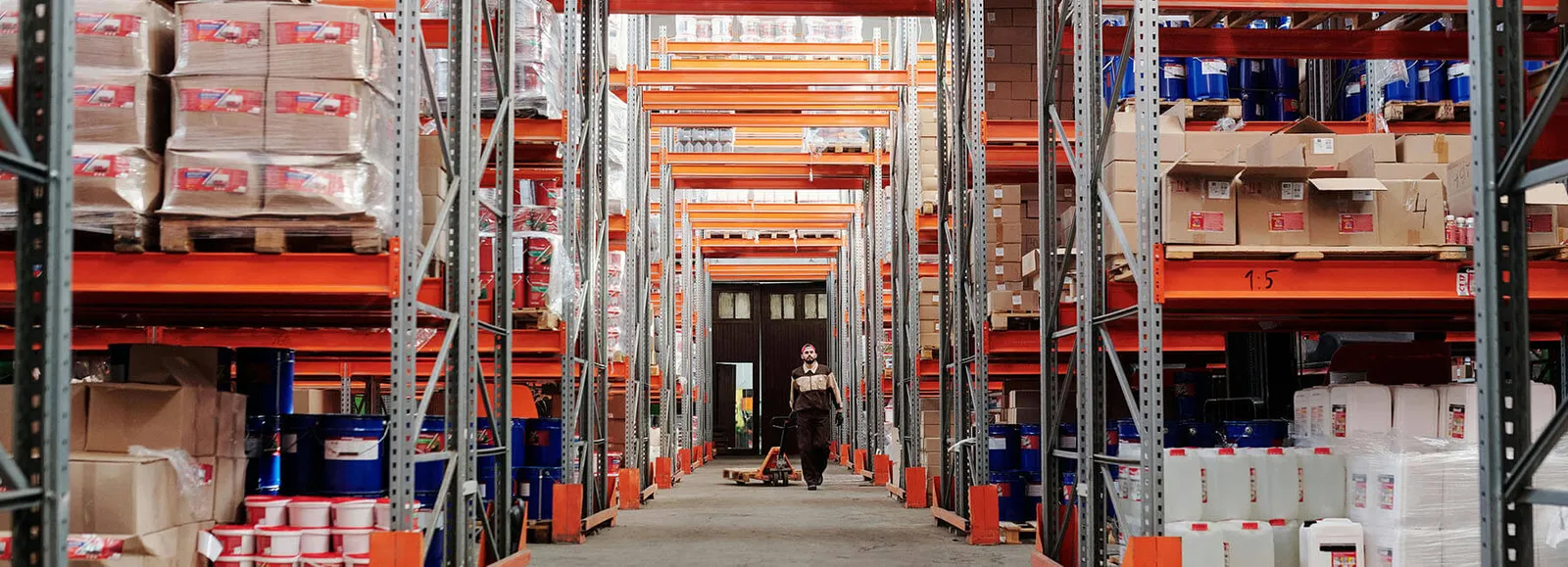
Retail buyers and distributors have explicit requirements that most fulfillment operations treat as friction: routing guides, specific label formats, delivery appointments, packing list standards, and ASN requirements. When those requirements aren't embedded in the operating process, they become a source of chargebacks, rejected deliveries, and relationship damage.
The problem usually isn't scale. It's that the requirements are managed case by case — someone checks the routing guide before each shipment, labels are generated manually, appointments are booked reactively — and under any volume or pressure, that system breaks.
A routing guide is a compliance document. It is not guidance — it is a set of requirements, and failure to meet them triggers financial consequences. A typical retail or large distributor routing guide specifies:
- Carrier requirements: which carriers are approved, which are not, and under what conditions you can use your own carrier
- Labeling: GS1 carton labels, pallet SSCC labels, label placement and format by buyer or location
- Pallet configuration: pallet dimensions, maximum height and weight, stacking rules, stretch wrap specifications
- ASN requirements: whether an Advance Shipping Notice is required, what it must contain, and when it must be sent relative to the shipment
- Delivery appointments: how to book, minimum lead time, what happens if you're early or late
- Packing requirements: carton dimensions, maximum weights, prohibited materials
- Document requirements: what documents must accompany the shipment and how they are to be presented
- Chargeback schedule: what each type of compliance failure costs
OPERATING MODEL
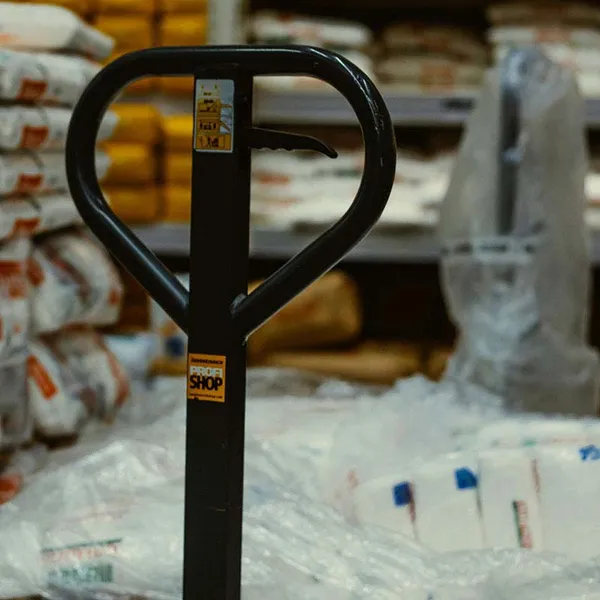
A stable retail and B2B distribution operation runs on explicit rules, not on accumulated institutional knowledge.
A B2B order cycle is not a single action — it's a sequence where each step either protects or creates risk. The failure modes in B2B distribution are almost always traceable to a specific step where a rule was missing or bypassed.
Requirements are embedded, not remembered
Carton build rules, label specifications, delivery constraints, and appointment protocols are captured in the operating spec before the first shipment. When requirements change, the spec changes — not someone's mental model.
Purchase orders drive execution, not improvisation
Each PO is validated against stock before pick begins. Discrepancies are resolved before dispatch. The shipment closes with documentation the buyer can match against their receiving log.
Exceptions are documented, not absorbed
Partials, shorts, and substitutions follow a defined escalation path. The buyer is notified before the truck leaves, not after the chargeback arrives.
Version control protects the operation
Routing guide updates, label version changes, and new buyer requirements are applied with version control. The previous version is retired before the new one goes live — not mixed into live shipments.
Purchase order received
The PO arrives from the buyer — via EDI, email, buyer portal, or direct communication. The first action is validation: does the stock exist, in the quantities ordered, with the quality state required by the buyer? The answer to this question determines whether the rest of the cycle runs correctly.
Stock validation before execution
A PO that is released to pick against inventory that doesn't match reality generates a short shipment. The buyer ordered 200 units. The warehouse ships 180 because 20 units were in a damaged state not reflected in the system. The buyer receives 180 units, invoices 200, and issues a short-ship chargeback plus a discrepancy claim. Stock validation before pick authorization is the gate that prevents this. Minimum requirement: physical stock matches system state before any pick line is authorized.
Carton build and compliance labeling
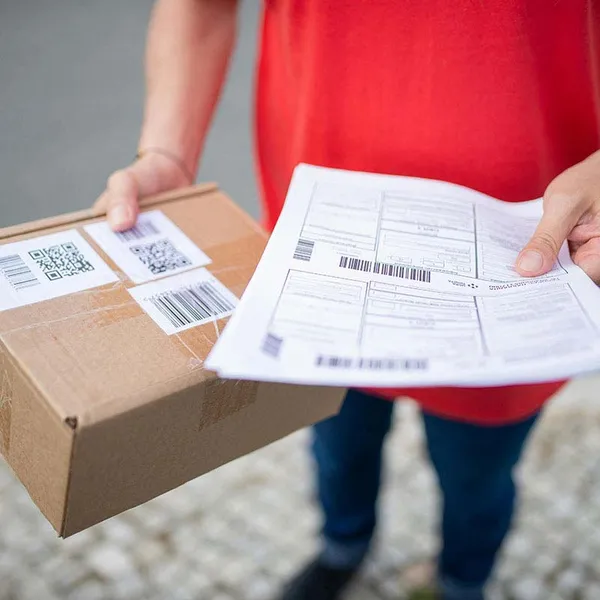
Pick runs to the buyer's carton configuration — units per carton, mixed vs. single-SKU rules, carton weight limits, pallet configuration. The compliance label is generated to the buyer's format: GS1 barcode, retailer-specific fields, SSCC if required, correct placement. This is not a creative interpretation — it is execution against the routing guide.
ASN transmitted before departure
When the buyer requires an Advance Shipping Notice, it must be transmitted before the truck leaves — not after it arrives at the buyer's DC. The ASN contains carton counts, SKUs, quantities, and the expected delivery details. Buyers use it to pre-populate their receiving system and schedule dock resources. A missing or late ASN is a compliance failure in most routing guides, even if the physical delivery is perfect.
DELIVERY COMPLIANCE
Why retailer delivery requirements are non-negotiable and how we enforce them.
A routing guide that isn't embedded in the fulfillment operation creates a manual compliance task before every shipment — someone must check the guide, configure the labels, and hope nothing was missed. At scale, this fails. The failure modes in B2B distribution aren't accidents — they're the result of treating routing guide compliance as optional until something breaks.
Routing guide chargebacks are not abstract. They have published rates, they compound within a single shipment, and they can eliminate the margin on a delivery entirely. Common chargeback types and their typical financial impact:
- Missing ASN: Fixed fee per shipment, commonly €50–250 depending on the buyer. Applies even if the physical delivery is correct.
- Non-compliant label format: Per carton fee, commonly €10–50 per carton. On a 40-carton shipment with the wrong label version, this accumulates quickly.
- Incorrect pallet configuration: Per pallet fee, commonly €50–200 per pallet. If your pallet height exceeds the buyer's routing guide maximum, every pallet is a chargeback trigger.
- Late delivery (appointment-based): Can be a percentage of the invoice value — commonly 2–5% — plus a fixed administration fee. On a €10,000 shipment, a 3% late delivery chargeback is €300, plus the fixed fee.
- Missing documentation: Per incident, varies by buyer, but commonly €50–150 per missing document type.
FAILURE MODES
Recurring problems and how they're prevented.
The same problems tend to repeat until the operating model becomes explicit.
Short or incorrect shipments from inadequate stock validation
A PO is released to pick without confirming physical inventory matches system state. Units arrive damaged, missing, or in a quality state not suitable for retail sale. The buyer receives less than ordered and issues a chargeback. Prevention: stock validation before pick authorization, with physical sample verification for critical orders. Every exception is logged and traced to source.
Labeling failures from version drift
The buyer updates the routing guide with a new label format. The old template is still in use. Some shipments are labeled to version 2, some to version 3. The buyer's receiving system rejects or delays version 2 cartons. This is a compliance failure the buyer didn't create. Prevention: version control on all labeling specs with a hard cutover — old version retired before new version goes live. WIP on old labels is cleared before the switchover.
Missing or late ASN transmissions
The ASN is generated but held until after the truck departs. The buyer's receiving team has no advance notice. They cannot pre-allocate dock space or pre-load their system. This delays receiving and in most routing guides is a chargeback trigger. Prevention: ASN is transmitted before goods are staged for carrier pickup. The moment pick is confirmed and carton counts are finalized, the ASN is sent. Proof of transmission is logged.
Missed or late delivery appointments
The shipment is ready, but the appointment slot isn't confirmed until hours before arrival — or is missed entirely due to routing delays. The buyer's receiving area isn't staffed or available. This is a compliance failure with explicit chargeback consequences. Prevention: appointments are booked before goods are staged. Delivery windows are built into dispatch planning. Exceptions are escalated before departure.
Documentation gaps at carrier handoff
The shipment leaves without a complete packing list, proof of carrier receipt, or buyer-specific compliance documents. If a discrepancy or damage claim arises later, there is no evidence trail. Prevention: shipment closure includes a documentation checklist. Nothing leaves until the checklist is complete. If a document is missing at handoff, the shipment is held.
SERVICES IN SCOPE
The operating model is executed through these service blocks. Each link covers the execution details:
Service modules linked to this operating model. The solution page explains the flow; each service page owns the execution details.
B2B fulfillment
— purchase order execution, carton and pallet logic, routing guide adherence, documentation handoffs
Labeling and relabeling
— carton labels, GS1 formats, buyer-specific label specs, version control
Inventory control
— stock truth before pick, lot and version segregation, reconciliation
LIMITS
LIMITS
We don't promise what we can't control. We don't run cold chain or temperature-controlled logistics. We don't handle ADR classes 1 and 7. We don't operate as storage-only. If a requirement isn't confirmed in conversation, we treat it as case-by-case and clarify it before execution.

NEXT STEP
Start with a scoped conversation where you share your buyer's routing guide (or describe the requirements if you don't have a formal document yet) and we map the operating spec: carton build rules, label requirements, ASN format, appointment logic, documentation package, and exception handling. We do this before the first shipment, not during it. If you don't have a routing guide yet because you're new to retail, we help you prepare for what the buyer will require.
Contact us to map your B2B flow → | Request a quote →
Map your flowFAQ