Solutions for Importers & Distributors
Importing and distribution don't break on volume. They break when reality arrives different from what the system expected: mixed SKUs on a pallet, unit counts that don't reconcile, labels that don't match the destination market, or lot/expiry that exist on the product but not in the records. We help importers and distributors run a controlled operating model from the Valencia region in Spain—built around verified receiving, inventory you can prove, and distribution handoffs that stay uneventful.
- Operating model
- Failure modes
- Execution routes
OVERVIEW
OVERVIEW
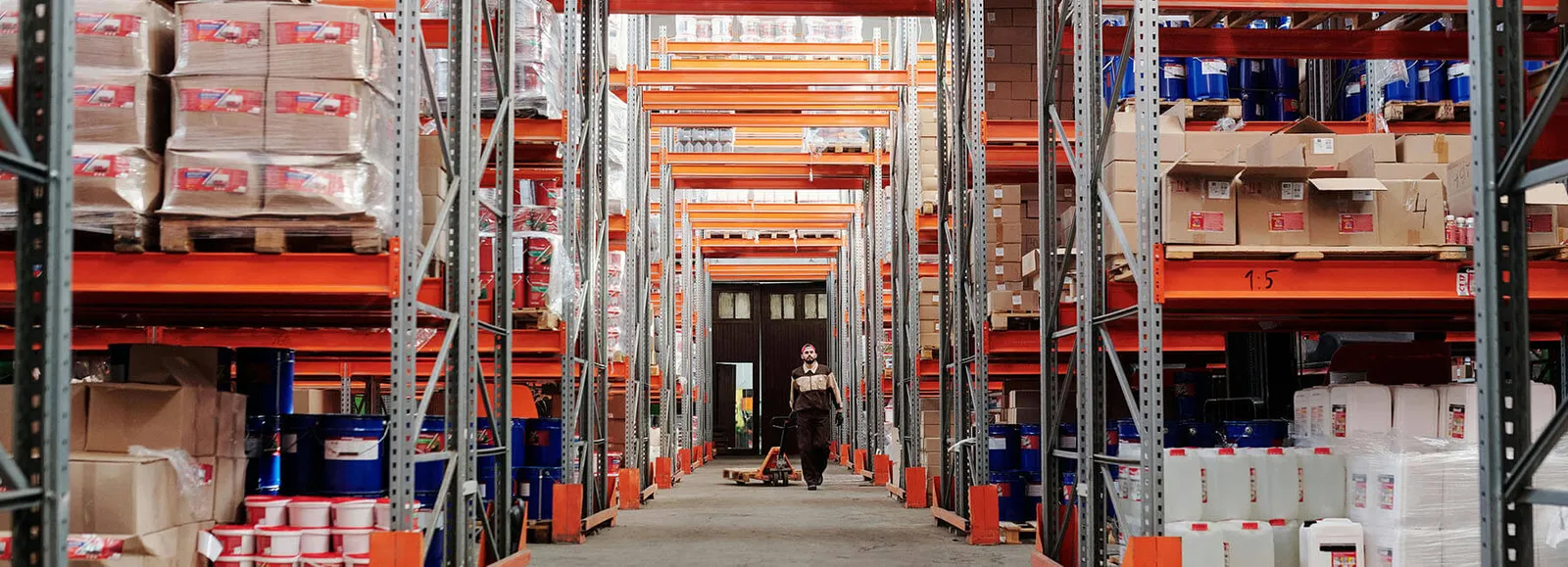
Most distribution problems begin at the first handoff. An inbound arrives with small variances, a supplier ships "equivalents," carton content is inconsistent, or labeling changes across lots. If the warehouse absorbs that ambiguity, the operation becomes a machine that manufactures discrepancies.
Control leaks when inbound is not verified, when inventory becomes "estimated," and when exceptions don't have a clean path. What follows is familiar: oversells, rework, channel disputes, returns noise, and margin that disappears in small corrections.
The importer trade-off: Everyone wants faster putaway and faster dispatch. But in importing and distribution, speed without proof creates a backlog of corrections you can't clear. We treat "what arrived" as a verifiable fact, not a hope. We treat inventory as living—what the system says must exist on the shelf. That's how distribution stays stable as inbound variety and outbound channels grow.
What "good" looks like: A distribution operation is predictable to run when each inbound doesn't require interpretation. When importing and distribution run well, the day-to-day becomes boring in the best sense:
OPERATING MODEL
Our approach treats importer/distributor readiness as a controlled system: verify inputs → maintain inventory truth → execute channel handoffs. We don't position this as "storage." Storage is a state. The solution is the operating model that keeps stock truthful and handoffs controllable.
The practical rule is simple: we verify inputs before we scale throughput. Reliability comes from verified receiving, explicit sellable-unit definitions, disciplined labeling, and an exception path that doesn't contaminate inventory.
1. Receiving with verification (before ambiguity enters storage)
We verify what arrived against what was expected, record discrepancies early, and keep nonconforming stock segregated. This prevents the warehouse from inheriting inbound variance. We compare physical receipt to purchase order or bill of lading, document any over/short/damaged/substitution, and decide the disposition immediately. If a unit is damaged, it goes to quarantine for assessment. If a SKU is swapped, it goes to a holding area until you direct the next step. The system never treats ambiguity as "probably fine."
2. Inventory truth (inventory lives, or it lies)
Inventory is treated as living: reconciliations happen when reality and system disagree, so the shelf stays provable. This is the foundation of a distribution operation that doesn't manufacture errors downstream. We count, we verify, we document. When the system says you have 100 units and the shelf has 95, we isolate the discrepancy immediately and determine why before inventory is considered available for dispatch.
3. Traceability when the product demands it
Lots/batches, expiry dates, FIFO/FEFO—applied when they matter, documented as rules, and operated as a habit. Traceability is not optional for products where rotation or regulatory requirements apply. If your SKU has a lot number printed on the carton, we capture it. If it has an expiry date, we track it. If FEFO (First Expired, First Out) is required, older stock doesn't leave until newer stock has shipped.
4. Channel-ready preparation by specification
B2B/retail prep, labeling, pack rules, and documentation handled as written specs so orders don't become bespoke. Each channel has different requirements; clear specs prevent drift. A B2B customer may require pallets with specific case breaks, bar code placement, or packing lists. A retail channel may require display-ready units with specific inner/outer carton labels. We treat each channel as a documented requirement, not a surprise.
5. Outbound handoffs with proof
Labels, documents, and closure steps follow a defined path so dispatch stays repeatable. This ensures the customer receives what was ordered and can verify receipt. The pallet leaves the dock with a packing list, barcode, manifest, and photographic evidence. If the customer reports a discrepancy, we have documentation to validate.
PORT ADVANTAGE
PORT ADVANTAGE
We operate from the Valencia region in Spain. For importers bringing stock into Europe and distributors serving Spain and the EU, Valencia is a practical base—especially when inbound arrives by pallet or container.
The Port of Valencia is one of Europe's primary container ports, making it efficient for importers to move containers directly into our facility for receiving verification and conditioning. This proximity removes intermediate handling, reduces transit time, and allows us to start the control process immediately upon arrival.
For importers, this means containers can be unloaded and verified within 24-48 hours of port arrival, not days. For distributors replenishing Europe, Valencia is centrally located for efficient outbound to Spain, France, Italy, and across the EU. We don't publish the exact warehouse address on the website, but in a qualified conversation we'll share the operational details you need to plan the flow.
CONDITIONING DECISIONS
CONDITIONING DECISIONS
Importing often requires conditioning—decisions about how stock is prepared before it becomes available for distribution. These decisions depend on what arrived, what your channels require, and what's economical.
Re-labeling and language adaptation. A supplier ships cartons in English; your Spanish retailer requires Spanish labels. We re-label by specification, apply the approved version consistently, and track the old label versions to prevent mixing. This happens before stock goes live in inventory.
Inspection and sampling. If supplier variance justifies it, we conduct AQL (Acceptable Quality Level) sampling or visual inspection. We document what we found, what was accepted, what was reworked, and what was rejected. Failures become documented reasons for supplier discussions, not silent discrepancies.
Palleting and restructuring. A container arrives with mixed SKUs and uneven pallet builds. We consolidate to clean pallet builds by SKU, apply proper labels, and prepare them for efficient outbound picking. This prevents the warehouse from putting out chaotic inbound as-is.

FAILURE MODES
Importer and distributor operations tend to break in predictable places:
The same problems tend to repeat until the operating model becomes explicit.
Inbound variance
Over/under counts, mixed SKUs, substitutions, and damaged units arrive without a clear verification process. When storage absorbs this without documentation, discrepancies enter the system and become expensive to isolate later. A supplier ships 100 cases but only 98 arrive; if this isn't documented at receiving, the system thinks you have 100 and picks are short.
Master data gaps
Missing dimensions, barcodes, pack configuration, or sellable-unit definition mean the warehouse must interpret what "one unit" is. This leads to picking errors, pack inconsistencies, and downstream channel disputes. Is a "unit" a single item, a pack of 6, or a case of 24? If the item master doesn't define it, picking interprets it.
Labeling mismatch
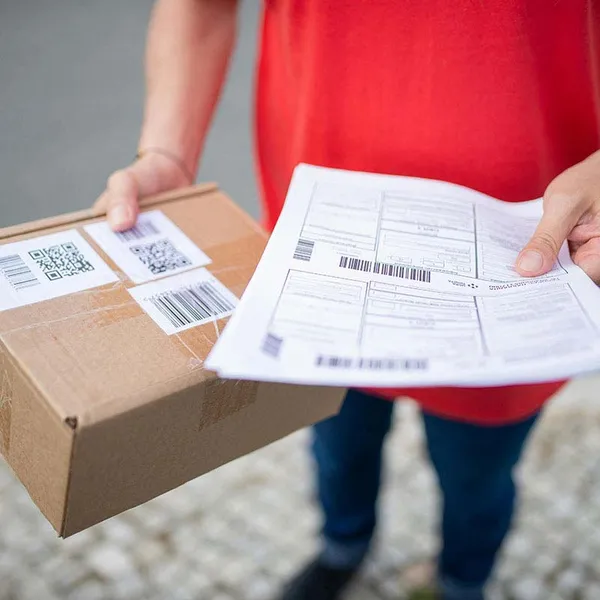
EAN/GTIN confusion, market language variants, and carton labels that drift between suppliers create chaos at handoff. The same SKU can have three label versions in stock, and outbound doesn't know which one to use. A retail customer rejects a pallet because the barcode is wrong; you have to rework or credit the order.
Traceability drift
Lots/expiry exist physically but are not captured operationally, so when a batch issue surfaces, you can't confidently locate or isolate the affected stock. A supplier issues a recall for lot 2024-001; if you didn't capture lot numbers, you can't tell which shipments were affected.
Exception creep
Quarantines become informal, rework bleeds into normal stock, and the warehouse gradually stops following the exception path because "urgent shipments" bypass it. What started as a temporary holding area for damaged units becomes a permanent overflow; eventually, the team ships questionable units to meet deadlines.
Channel friction
B2B requirements aren't pinned down (packs, labels, docs), so each order becomes bespoke and the team spends time adapting instead of executing consistently. A customer changes their pallet requirements mid-peak; the warehouse has to improvise or stop shipping.
Peak readiness
Peaks don't fail on day one—they fail on day three, when exceptions become the normal path and the operation starts drifting. New SKUs without clean identifiers, new pack configurations without a spec, and "we'll sort it later" become the process.
SERVICES IN SCOPE
This page describes the operating model. Each service module page covers execution details:
Service modules linked to this operating model. The solution page explains the flow; each service page owns the execution details.
Fulfillment (end-to-end 3PL execution)
End-to-end receiving, storage, pick and pack, dispatch, and returns control.
B2B fulfillment (PO workflows, pallet/carton logic)
Purchase order execution, carton and pallet logic, routing guide adherence, and documentation handoffs.
Cross-docking (when storage is not the point)
Fast inbound-to-outbound handling when long-term storage is not the point.
Inventory control (inventory truth / traceability)
Stock truth, traceability, reconciliation, and status control before execution.
Labeling / relabeling (languages, compliance context)
Label templates, market-language requirements, relabeling, and version control.
Value-added services (kitting / pack builds / rework)
Kitting, sets, pack builds, controlled rework, and other defined preparation tasks.
Quality (inspection / AQL)
Inspection, AQL sampling, tolerance management, and evidence-led quality decisions.
Returns (triage and value recovery)
Returns triage, disposition, recovery decisions, and repeat-failure signals.
LIMITS
LIMITS
We don't promise what we can't control. We don't run cold chain or temperature-controlled logistics, we don't handle ADR classes 1 and 7, and we don't operate as storage-only. If a requirement isn't confirmed in your inputs, we treat it as case-by-case and clarify it before execution.

MINIMUM INPUTS
To keep importing and distribution uneventful, we need a few things pinned down before execution:
If any of those are unclear, we pause and clarify—because fixing it downstream is always louder and more expensive.
- Item master basics (SKU, barcode/EAN/GTIN logic, pack configuration)
- What counts as one sellable unit (single, inner, master; bundling rules if any)
- Inbound profile (pallet/container, frequency, typical variances)
- Who owns customs/forwarding responsibilities and which documents arrive with inbound (defined ownership, no assumptions)
- Channel requirements (B2B/retail/eCommerce: labels, docs, pack rules)
- Any traceability constraints (lots/expiry, FIFO/FEFO rules)
NEXT STEP
Map your inbound-to-distribution flow. If you want a useful reply, send us:
Send your item master snapshot, inbound profile, served channels, traceability requirements, and the exceptions that repeat most often. We will identify which controls to standardize first and which service modules should own each part of the flow.
Map your flowFAQ